Trying to decide between a brand-new home on the edge of Elkhart and a classic in-town resale? You’re not alone. Each path offers real tradeoffs in price, space, energy costs, and maintenance. In this guide, you’ll see what typically changes when you pick one route over the other in Elkhart, plus the key questions to ask before you commit. Let’s dive in.
Elkhart market snapshot
As of January 2026, Redfin reported a median sale price of about $143,000 for homes sold inside Elkhart city. That city median is shaped by older in-town inventory and smaller average footprints. In the same period, new construction listings in the Elkhart city area showed a median list price near $210,000, with many larger new homes in active subdivisions pricing higher than that snapshot. County-level medians can run higher than the city because newer, larger homes outside city limits lift the average, a difference noted in National Association of Realtors materials.
Price gaps vary by floor plan, finish level, and location. Always compare recent sold comps on the specific block or subdivision you’re targeting.
Space and setting
In-town Elkhart
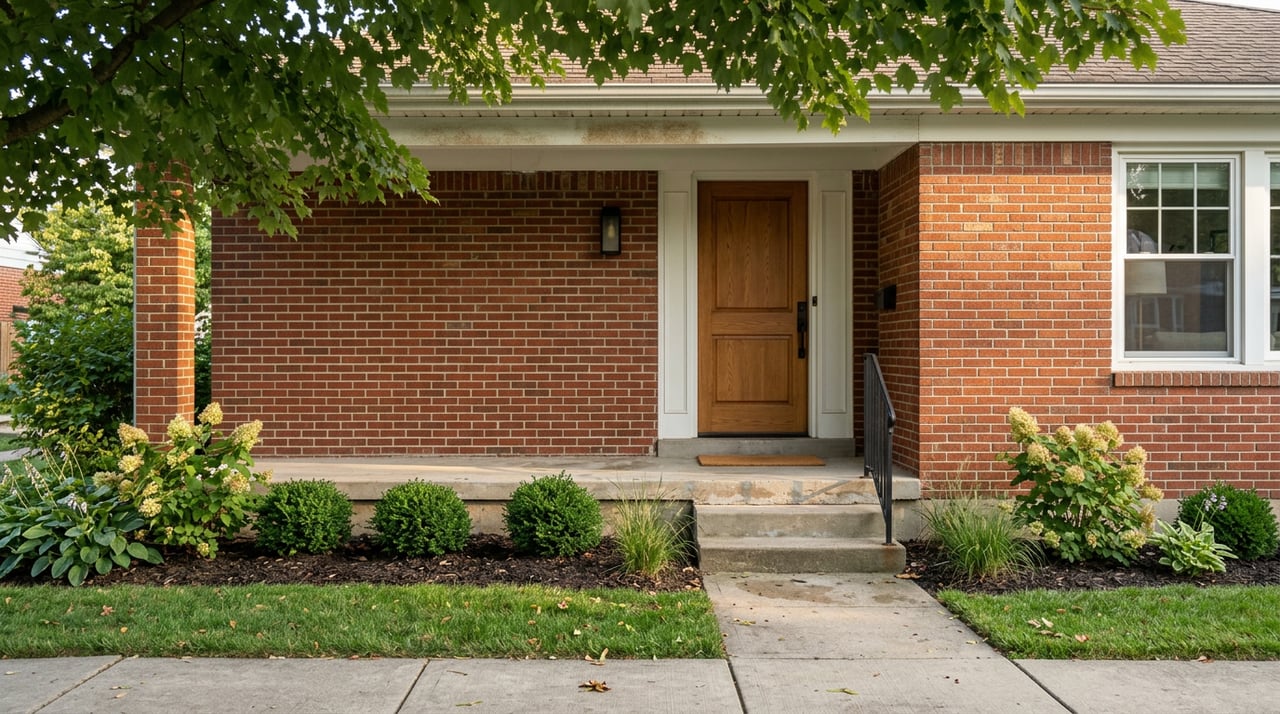
Many in-town Elkhart houses were built before 1970, which matches housing age patterns in the broader Elkhart Community Schools area. You see smaller floor plans, mature street trees, and a traditional street grid. In-town lots commonly range around 0.10 to 0.30 acre, which supports walkable blocks and simpler yard care. Older homes can offer charm and centrality, but you should plan for system updates based on age.
- Explore housing age patterns in the district area at the National Center for Education Statistics: Elkhart Community Schools profile.
New subdivisions near the city
New builds around Elkhart often sit on larger parcels, typically 0.25 to 0.8 acre or more depending on the community. Streets usually include modern drainage, sidewalks or curbs, and consistent design standards. Some neighborhoods have homeowners associations that govern exterior changes and maintain shared areas. You’ll often find open-concept plans, taller ceilings, and attached garages designed for today’s storage needs.
The true cost of ownership
Purchase price patterns
Builders tend to price new homes to reflect modern layouts, larger lots, and current finishes. In Elkhart, it’s common for many in-town resales to trade below the pricing band for larger new builds, while some new-home offerings start closer to the city’s new-build listing median. The premium depends on square footage, lot, features, and exact location.
Maintenance and warranties
New construction usually includes a structured builder warranty, often called a 1-2-10 program. That means 1 year for workmanship, 2 years for systems like electrical and plumbing distribution, and 10 years for structural coverage. Ask for the warranty document, what’s excluded, and whether it’s backed by a third-party provider. You can learn how these programs typically work from 2-10 Home Buyers Warranty.
Older in-town homes may require near-term replacements for roofs, HVAC, water heaters, or windows. A common planning guideline is to budget roughly 1 to 4 percent of a home’s value per year for maintenance and repairs, with the higher end for older or larger properties. Use your inspection to sharpen those estimates line by line.
Energy efficiency and monthly bills
Indiana enforces an energy conservation code that references the 2018 IECC, so homes built to current code in Elkhart are generally more efficient than many older in-town houses. You can confirm state code references in the ACEEE Indiana energy policy summary. Some builders go beyond code. ENERGY STAR materials note that certified new homes are typically at least about 15 percent more efficient than code-built homes, with many delivering 20 to 30 percent savings over standard new construction, depending on the package and climate. Review HERS or ERI scores, insulation levels, window specs, and HVAC ratings, and learn more from the EPA’s overview of local residential energy efficiency.
Utility incentives can sweeten the deal. Elkhart-area service is provided by Indiana Michigan Power in the city and NIPSCO across parts of the county, and programs may include new-construction rebates or marketing support for high-efficiency equipment. Use the county’s utility overview to confirm who serves your lot and where to check programs: Elkhart County business accessibility.
Property taxes and assessments
Elkhart County assesses property each year on January 1. Tax bills are typically mailed in April and due in May and November. Indiana also applies circuit breaker caps that limit taxes to 1 percent of gross assessed value for homesteads, 2 percent for other residential or agricultural property, and 3 percent for other property, subject to qualifying rules and local referenda. Review parcel specifics with the county’s portal at the Elkhart property tax records site and read the state’s explanation of the 1-2-3 percent tax caps.
New construction is assessed like any home and will appear on the next roll. Ask how partial assessments phase in if your closing occurs mid-cycle.
Insurance costs
Insurers price premiums by replacement cost, materials, age of systems, and risk factors like roof age and wiring. New construction often qualifies for lower premiums because of modern systems and code-compliant features, though quotes vary by carrier and location. A helpful explainer on why new homes can be less expensive to insure is this industry overview from Hotaling Insurance. Always compare quotes for the specific properties you’re considering.
Financing and appraisal notes
New-build appraisals can be sensitive to recent comps, especially if a subdivision is early in its sales cycle. Lenders may use broader comps if few nearby sales exist, which can affect loan-to-value. Be ready to document upgrades, lot premiums, and builder incentives. Work with a lender who regularly closes new construction in Elkhart so you understand timelines for draws, inspections, and final appraisal.
Decision guide: Which path fits you?
- Choose new construction if you want modern layouts, energy savings, and lower early maintenance risk. Larger lots and design consistency are common benefits.
- Choose in-town resale if you value a lower entry price, a central street grid, and established neighborhoods. Plan to update systems on a timeline that fits your budget.
- Consider lifestyle costs. Yard size affects weekly time and annual expenses. Efficiency affects your monthly utilities. Your inspection or spec sheet is your best tool for projecting real ownership costs.
Buyer checklists
If you’re considering new construction
- Confirm the lot and site costs. Ask for the final plat, setbacks, easements, and any grading or drainage extras.
- Get the builder’s warranty in writing. Verify coverage periods, exclusions, and third-party backing. See typical structures at 2-10 Home Buyers Warranty.
- Review energy specs. Request insulation R-values, window U-factor and SHGC, HVAC efficiency ratings, and a HERS or ERI score. Benchmark with the EPA’s energy efficiency guide.
- Identify your utility providers and incentives. Confirm whether Indiana Michigan Power or NIPSCO serves your address and what programs apply using the county’s accessibility and utilities overview.
- Clarify what’s turnkey. Ask what’s included for landscaping, driveway, final grading, and any allowances for fencing or trees.
If you’re buying an in-town resale
- Prioritize a thorough inspection. Focus on structure, roof age, electrical panel, plumbing materials, foundation or drainage evidence, and HVAC age.
- Budget realistic reserves. Many buyers set aside about 1 to 4 percent of the home’s value annually for maintenance, especially for older homes.
- Check permits for past work. Confirm additions or conversions were permitted with the City of Elkhart Building & Code Department. Unpermitted work can add cost and delay.
How we help in Elkhart
You deserve clear advice, not guesswork. As a boutique new-construction specialist with deep regional experience, we help you compare real numbers across build and resale options in Elkhart. If you lean new, we guide you through lot selection, plan reviews, allowance control, and contract terms so you protect value and hit your timeline. If you lean in-town, we sharpen your inspection focus, estimate near-term updates, and negotiate to your budget.
Ready to see which path fits you best? Connect with Mike Lee's Team for a focused strategy session and a tailored short list in Elkhart.
FAQs
What is the current median sale price inside Elkhart city?
- As of January 2026, Redfin reported about $143,000 for the city’s median sale price, though medians vary by source and change over time.
Are new homes in Elkhart usually more expensive than in-town resales?
- Often yes; Redfin’s new-home listing snapshot showed a median near $210,000 and many larger subdivision builds run higher, while many in-town resales trade below those levels depending on size and condition.
How do Indiana property tax caps work for Elkhart homebuyers?
- Indiana’s circuit breaker caps limit homestead taxes to 1 percent of gross assessed value, with 2 percent for other residential or agricultural property and 3 percent for other property, per the state’s DLGF guidance.
What should I budget for maintenance on an older in-town home?
- A common planning rule is 1 to 4 percent of the home’s value per year, with the higher end for older or larger properties, then refine after your inspection and contractor quotes.
Do new Elkhart homes come with warranties?
- Most reputable builders offer structured coverage, commonly a 1-2-10 style program for workmanship, systems, and structural items; ask for the written document and see typical frameworks from 2-10 Home Buyers Warranty.
Are there energy incentives for building a new home around Elkhart?
- Programs vary by utility and year; start by confirming whether Indiana Michigan Power or NIPSCO serves your lot using the county’s utilities overview and ask about current residential new construction rebates.