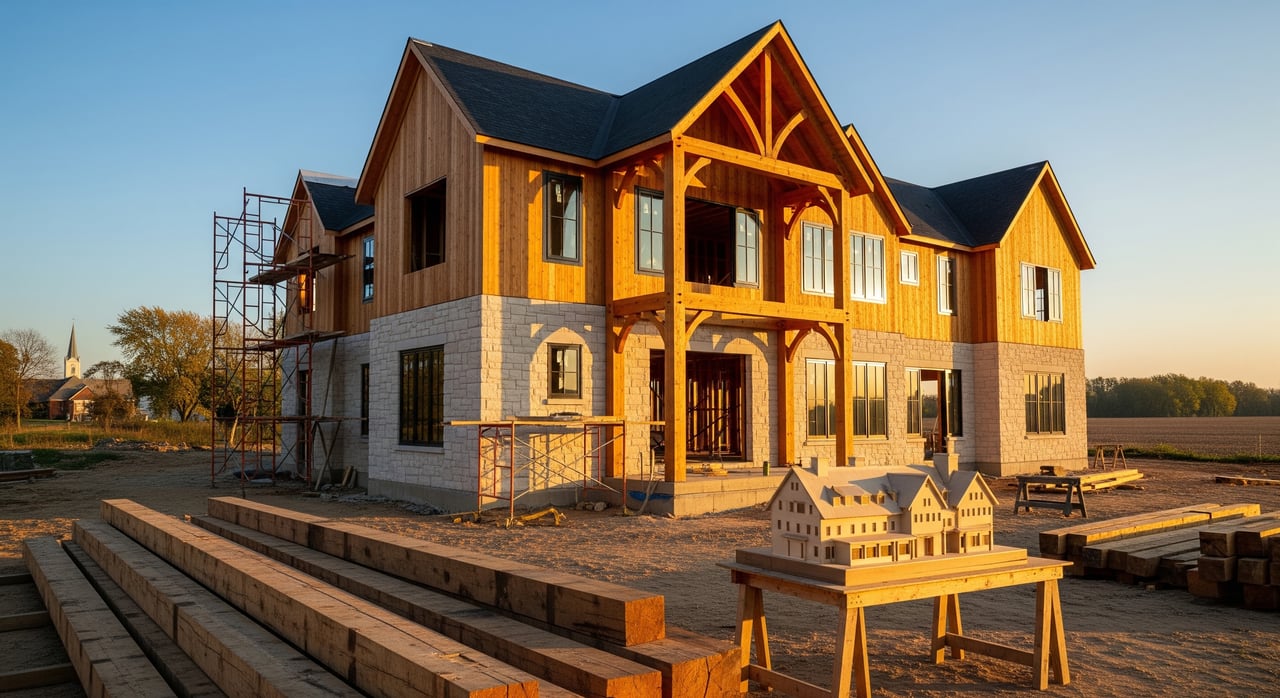
Planning to build a home in Goshen and wondering how to fund it before the walls go up? You are not alone. Construction loans power most new builds, but they work very differently than a traditional mortgage. In this guide, you will learn the basics, see the timeline from pre-approval to move-in, and understand local steps in Goshen and greater Elkhart County so you can plan with confidence. Let’s dive in.
Construction loan basics
A construction loan is short-term financing that pays for your build in stages. Instead of receiving one lump sum at closing, your lender releases funds in draws tied to milestones like the foundation, framing, and final finishes. During construction, you typically make interest-only payments on what has been disbursed. After the home is complete, your financing converts or refinances into a standard mortgage.
How it differs from a mortgage
- Funds are released in draws, not all at once.
- Payments during construction are usually interest-only on the amount drawn.
- Underwriting is based on the completed home’s value, your budget, and builder qualifications.
- Rates and fees during construction are generally higher than a standard mortgage.
- Inspections occur before each draw to confirm progress.
One-close vs two-close
- Construction-to-permanent, also called a one-close loan, combines your construction financing and your permanent mortgage into a single closing. You pay one set of closing costs and the loan converts automatically when the home is finished.
- Stand-alone construction, also called a two-close loan, funds the build first, then you refinance into a permanent mortgage after completion. This means two closings and two sets of closing costs.
What about renovations
Renovation or rehab loans, such as FHA 203(k), are designed for improving an existing home. For ground-up construction, buyers typically use a construction loan or a one-time-close option offered through certain programs when available.
How the financing flows
Pre-approval and planning
Start by getting pre-qualified or pre-approved with a lender that is experienced in construction loans. Share your credit, income, assets, and target budget. Decide whether you will finance a lot purchase as part of the loan or build on land you already own. Choose a builder and sign a detailed, fixed-price contract with a clear schedule and specifications.
Application and underwriting
Your lender will collect personal financial documents, signed plans and specs, a line-item budget with a contingency, and your builder’s license, insurance, and references. The lender orders an appraisal based on the proposed finished home. Underwriting reviews your credit and debt-to-income, the builder’s track record, and project metrics such as loan-to-cost and loan-to-value.
Closing and first disbursement
At closing, your loan is set up. The first disbursement typically covers the lot purchase if included, permits, and early work like site prep and foundation. For one-close loans, you will not need a separate closing later to convert to permanent financing. For two-close loans, you will refinance into a permanent mortgage after completion.
Draws and inspections
Your draw schedule maps to milestones such as foundation, framing, mechanicals, exterior finish, interior finish, and final completion. Before each draw, the lender usually orders an inspection to verify progress and may hold a retainage of about 5 to 10 percent until the end. Draw requests commonly include contractor invoices and lien waivers.
Payments during the build
Expect monthly interest-only payments on the funds that have been disbursed to date, not the full loan amount. Property taxes and insurance may be escrowed or handled separately depending on the lender.
Completion and conversion
Near the end, a final inspection and Certificate of Occupancy from the City of Goshen or Elkhart County are required before the last disbursement. If you chose a one-close loan, your financing converts to a regular mortgage and principal plus interest payments begin. If you chose a two-close structure, you complete a refinance into permanent financing, which may include a new appraisal.
What lenders require
Down payment and reserves
Construction loans often call for more equity than a standard mortgage. Plan for a down payment around 20 to 25 percent of total project cost, though specific programs can vary. Lenders also often require cash reserves that cover several months of payments, plus a construction contingency of 5 to 10 percent in your budget.
Credit, documents, and builder vetting
You will provide credit and income documentation similar to a regular mortgage, plus the construction contract, plans, and budget. Lenders also review your builder’s license and insurance, local references, and experience. Some lenders keep approved builder lists.
Loan sizing: LTC and LTV
Lenders look at loan-to-cost, which compares the loan amount to your total project cost, and loan-to-value, which compares the loan to the appraised value of the finished home. Both influence how much you can borrow and how much cash you must bring.
Rates and fees
Interest during construction is usually variable and higher than permanent mortgage rates. Some one-time-close products allow you to lock the permanent rate upfront. Expect standard closing costs along with construction-related administration and inspection fees. Two-close loans will include costs at both closings.
Goshen and Elkhart specifics
Permits and inspections
Inside city limits, the City of Goshen Building Department issues permits and conducts inspections. In unincorporated areas, Elkhart County handles permitting and inspections. Your builder coordinates these with your lender since a Certificate of Occupancy is required before final disbursement.
Utilities and site work
Confirm water and sewer service early. Some lots in greater Elkhart County need a well or septic system or may require utility extensions. Stormwater, drainage, and local zoning rules can also affect design and site costs, so include this work in your budget and timeline.
Floodplains and insurance
Check FEMA flood maps for any flood zone designation. If your lot lies in a floodplain, lenders will require flood insurance, which increases ongoing costs.
Taxes and assessments
New construction triggers a reassessment by the Elkhart County Assessor after your home is complete. Your future property taxes may change from the initial estimates, so plan for adjustments.
Lien protections and local rules
Indiana has mechanics’ lien laws that protect contractors and suppliers. To protect yourself, require lien waivers at each draw, maintain proper insurance standards with your builder, and use retainage or escrow as needed. Consider a legal review of your contract and lien protections.
Choosing a lender locally
You can work with community banks and credit unions that know local permitting cycles and builders, regional banks with construction products, or national lenders that specialize in construction. Community lenders may offer added familiarity with Goshen and Elkhart County processes.
Risks and how to manage
Draw or inspection delays
Delays in inspections or paperwork can slow down draws and disrupt your schedule. Set a clear draw process, schedule inspections ahead of time, and communicate proactively with your lender and builder.
Cost overruns and change orders
Change orders add cost and can increase your required cash. Use a fixed-price contract where possible, include a healthy contingency, and approve changes only after you understand the impact on budget and schedule.
Builder disputes or insolvency
Protect yourself with a vetted, licensed, and insured general contractor, lien waivers at each draw, and retainage until final completion. Keep documentation current and follow the contract’s dispute resolution steps.
Permit and inspection hold-ups
Confirm permit timelines with the City of Goshen or Elkhart County early and build buffer time into the schedule. Align lender inspections with code inspections to reduce friction.
Site surprises
Soil issues, drainage corrections, and utility extensions are common surprises. Order a survey, soil test, and utility availability checks before finalizing the budget.
Practical checklist
- Get pre-approved with a lender that regularly closes construction loans in Goshen or Elkhart County.
- Choose a licensed, insured builder with strong local references and recent projects.
- Use a fixed-price, date-certain contract with detailed specs and a clear change-order process.
- Include a 5 to 10 percent contingency and separate reserves for interest carry and taxes.
- Confirm permits, inspections, and utility availability before breaking ground.
- Set a draw schedule that matches milestones and inspection timing.
- Collect lien waivers at each draw and keep all invoices and approvals organized.
- Plan for final tasks required for conversion, including the Certificate of Occupancy and final lien waivers.
Work with a local advisor
Building a custom home should feel exciting, not overwhelming. With 13-plus years in new-home advisory and a builder partnership that helps unlock early lot access and design customization, you get hands-on guidance from site selection to closing. You will have support with contracts, draw schedules, and lender coordination so your build stays on time and on budget.
Ready to talk through your plan in Goshen or greater Elkhart County? Connect with Mike Lee's Team for a clear, step-by-step path to your new home.
FAQs
What is a construction-to-permanent loan in Goshen
- It is a single, one-close loan that funds your build and then converts to a regular mortgage when construction is complete, which helps you avoid a second closing.
How much down payment do I need for a Goshen build
- Plan for about 20 to 25 percent of total project cost, though specific lender programs can vary and certain products may offer lower options.
How are construction loan draws released in Elkhart County
- Funds are released at milestones like foundation, framing, and final completion, usually after a lender-ordered inspection and with required lien waivers.
Do I make full mortgage payments during construction in Goshen
- Most lenders require interest-only payments on the funds already drawn, with full principal and interest payments beginning after conversion to permanent financing.
What inspections are required for a new build in Goshen
- Your lender typically orders inspections before each draw, and the City of Goshen or Elkhart County conducts code inspections needed for your Certificate of Occupancy.
Can I lock my permanent mortgage rate before my Goshen build is done
- Some one-time-close products allow you to lock the permanent rate upfront, while two-close loans leave you exposed to market rates at the time of refinance.